

When we say “Web Designer” , it can mean someone who creates simple marketing graphics, someone who builds full websites, or even someone who works on complex product interfaces with a product team. Because of that, the salary for “web designers” varies a lot.
So, we took a deeper approach and analyzed the latest 219+ real job postings and salary reports from maximum web designers job posting platforms like Indeed, Glassdoor, LinkedIn, ZipRecruiter, and Upwork.
And, we found different salary patterns based on role type, location, skills, and even employment model for what designers are earning today.
The industry is changing faster than we expected. Some roles, especially UX and product-focused design positions, are growing fast and getting paid far more than before.
But on the other side, we also saw that entry-level and non-specialized design jobs are facing pay cuts as AI tools make many basic tasks faster and cheaper to produce.
Here’re the few surprising facts we get from our web designer salary dataset research:
- UX/UI Designers earn a median of $115,000, about 64% higher than Graphic/Marketing Designers at $70,000.
- Senior and Lead roles earn (average $150,000) over 1.5 to 2.5 times more than entry (average $62,500) to mid level positions (average $92,247).
- Designers who combine visual design and front-end coding can reach salaries up to $205K annually.
- Entry-level and junior roles are seeing around 17-25% lower offers as AI tools handle basic design tasks.
Now, let’s dive into the details with our in depth analysis.
How Much Does a Web Designer Make?
To understand how much a web designer earns, we have to look beyond the title itself.
From the dataset we reviewed, this field now breaks into seven clear modern roles, each with its own skill level, job focus, and earning potential.
| Web Designer Role | Median Annual Salary (in USD) | Typical Experience (Years) | Primary Focus | Employment Types |
| Senior Web Designer | $125,000 | 7+ | Product Strategy, User Research, Design Systems, Leadership | Full-Time, Onsite/Hybrid |
| Product Designer | $80,000 | 3+ | Feature Design, UX Iteration, Prototyping (Figma/Sketch) | Full-Time, Hybrid/Contract |
| UX/UI Designer | $115,000 | 5+ | User Flows, Wireframing, High-Fidelity UI | Full-Time, Hybrid |
| Marketing/Brand Designer | $100,000 | 5+ | Brand Identity, Digital Asset Creation, Style Guides | Full-Time, Hybrid/Remote |
| Website Front End Designer | $75,000 | 3+ | Front-End Implementation, HTML/CSS/JS, CMS (WordPress/Shopify) | Full-Time, Contract |
| Graphic Designer | $65,000 | 2-5 | Marketing Assets, Social Media, Email Campaigns | Full-Time, Freelance |
| Other/General Designer | $55,000 | 1-3 | General Design Support, Hourly/Project-Based Tasks | Varies (Full-time/Contract/Hourly) |
Well, this is the general average salary, but it can be increased or decreased depending on your location, skill level.
Here’s a diagram of how different skilled web designers are making annually based on our survey data.
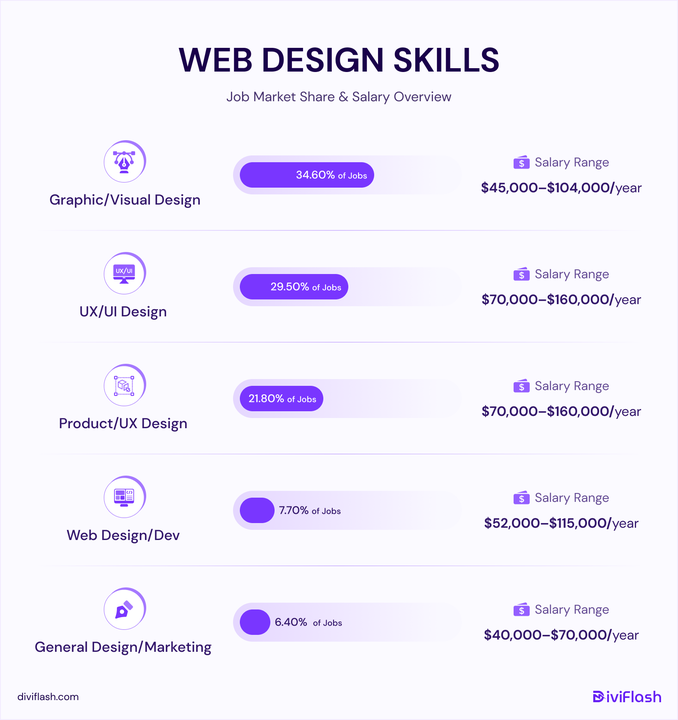
So, now, let’s analyze the salary range in depth based on different criteria.
Web Designer Salary by Experience Level
It’s obvious that more experience usually means more money, but when we look at the data from our survey, the jump is much bigger than most people expect.
Salaries rise sharply as you move from junior to mid-level, and the jump becomes even more dramatic once you reach senior or leadership roles.
So, here is the breakdown.
Junior / Entry-Level Designers (0-2 Years)
Junior designers made up around 9.8% of all reported salaries, and interestingly, the hiring market reflects a similar pattern.
In most regions, only about 10–12% of available web design jobs target entry-level candidates, as companies prefer individuals who can contribute on a lower budget with minimal training.
The actual pay range we saw for entry to junior web designer roles from $40,000 to $75,000. So, the average median salary sits at $62,500 per year and ($15-$25 hourly).
Key skills at this stage include proficiency in core tools like Figma or Sketch, and roles like Jr. graphics designers or intern web designers.
Interestingly, 8.9% of entry-level designers reported earning high, usually in high-cost regions (like San Francisco or Zurich).
Again, a small percentage said they are under $35k from countries with lower median tech salaries or those working part-time.
Mid-Level Designers (2-6 Years)
Mid-Level roles formed the dominant segment, representing about 68% of all salaries reported. This aligns around two-thirds of active web design job postings are aimed at mid-level talent.
It is actually the “sweet spot” for employers who can operate independently without the high salary expectations of senior roles.
This mid level group showed the widest income variability, spanning from $51,000 to $166,400 per year. The average median salary is $78,000 annually, and the typical contract rate ranges from $20 to $65 per hour.
But, what we get is that over 50% of all available mid-level job postings offer a maximum potential salary that still falls below this average.
Conversely, about 80% top earners in this group typically combined UI/UX experiences with front-end development skills.
For skills, this level is for graphics designers, visualization techniques, conversational product design etc. You might also guide intern designers and collaborate with the product team.
Senior Designers (6+ Years)
Senior designers represented roughly 20–25% of reported salaries, but hiring demand for this level is growing fast.
The salary range sits between $90,000 to $197,000 per year. The average pay is $125,000 per year (or $55–$100 per hour).
Their work is characterized by depth in complex problem-solving, like leading major product features or optimizing high-traffic user flows. They are often specialists in a niche like SaaS, or advanced UX design or interactive prototyping.
Though some companies offer hourly payment, in most cases, these positions are on-site and full time.
We’ve also noticed that in tech-focused companies that aren’t pure design agencies, a Senior Designer often acts as the lead design role.
The Highest Paid Lead Designers (8+ Years)
Some solely design or marketing companies have Lead and Director-level designers positions. Based on our data, we’ve found these lead positions are only about 1–3% of all web design job postings.
These are leadership roles for individuals with titles like "Sr. Product Designer, AI/ML" or "Digital Design Director." For this top tier, the average median pay is approximately $180,000 per year.
The absolute highest salary ceiling in our data belongs to a single highly specialized role “Senior Product Designer”, with a potential maximum of $515,000 per year.
Their focus shifts from execution to high-level strategy, team management, hiring, and influencing the company's product roadmap.
Web Designer Salary by Employment Type
Web designer roles vary widely depending on the type of employment; full-time, remote, or freelance/part-time.
Each type comes with different responsibilities, expectations, and managerial positions. And, based on the roles, we noticed a significant 20%-30% difference on the salary ranges.
Full-Time
Around 80% full-time positions are generally reserved for senior or lead web designers based on our survey.
However, 50% or more of all full-time listings are now advertised as either Hybrid (partially on-site) or Fully Remote. So, we’re seeing a dramatic shift in post-pandemic hiring trends to secure top talent regardless of geography.
The full time web designers roles are mainly Senior Web Designer, Lead Web Designer, Digital marketing designers, Sr. product designers. So, the salary ranges also vary depending on the position, usually $40,000 – $170,000+ per year. So, on average the median is $90,000 annually.
The huge range because sometimes mid to junior levels are also paid as full time employees and the salary also depends on the company’s size.
These full-time roles usually exist in marketing, communications, or digital teams at companies that are primarily design-focused.
Along with salary, full-time roles often include health insurance, paid leave, retirement contributions, performance bonuses, and professional development opportunities. And, these extra benefits add an estimated 25–40% value on top of the base salary.
Freelancer
For freelance web and UI/UX designers, we mainly look at data from platforms like Upwork, since most hourly jobs are posted there.
The total range found in the dataset for all hourly digital design work runs from a low of $5.00/hour to a high of $100.00/hour. However, these extremes highlight the difference between entry-level or budget-focused project bids and highly specialized expert contracts.
- Senior/Expert UI/UX & Web Designers: $45–$80/hr (median $62.86/hr)
- Mid-Level UI/UX & Figma Specialists: $30–$60/hr (median $45.17/hr)
- General/Budget Web & Graphic Designers: $20–$40/hr (median $29.37/hr)
- Other Hourly Design (generalists/simple tasks): $15–$35/hr (median $26.62/hr)
A beginner freelancer might make $1,000–$2,000 per month, while experienced ones with steady clients or niche expertise (like UX/UI or eCommerce design) can earn $60,000–$100,000+ per year.
Even, senior designers working on contract (hourly) can earn a gross income equivalent to 18% more than the median full-time senior salary
Freelancers often earn more per project than full-timers, but their income can vary from month to month.
Remote
Remote and hybrid web designer roles are growing, especially in tech-driven companies or agencies that hire talent beyond their local region.
So, even a designer in Asia working for a U.S. or European company may earn $58,000–$114,000 annually, much higher than local pay.
Responsibilities are similar to full-time roles but often don’t get other facilities like insurances, paid leaves, etc.
Mainly junior to mid levels are more open for remote positions, but now, we’re noticing a huge increase for the seniors roles as well.
Web Designer Salary by Skillset
The question isn't just how long you've been designing, but what you've been designing. Our survey clearly shows that a designer’s salary ceiling depends on specialization, with over a $45,000 gap between the highest and lowest paid design roles.
We analyzed the job titles to categorize four distinct specializations to determine which web designing skills make the most money.
UI/UX designers
UX/Product Design is the largest, best-paid, and most in-demand category in our data. It represents about 30% of all jobs we consider. Since their design decisions directly impact conversions and user satisfaction, businesses are willing to pay more for this expertise.
- Salary range: $70,000 - $160,000 per year
- Average salary: Around $115,000 per year
- Hourly rate: Typical contract rates $30–$40/hour; senior or highly experienced roles $60–$100/hour
From the data, we’ve noticed that the highest-paying roles are mostly senior UX/Product Designers, UX Researchers, and specialized UX roles.
This is mainly because these roles directly influence product designs, user flow, and revenue outcomes like high-impact responsibilities.
Even early-career UX designers in our dataset received solid pay, often above $60K, which is higher than many other design categories.
Most lead UX/UI design jobs are full-time, with hybrid models and a very smaller portion is offering fully remote.
Web/Front-End Design
Web and Front-End Design roles make up roughly 15% of all design jobs in our dataset. Companies hiring for these roles value a mix of design sense and coding ability, particularly skills in HTML, CSS, and sometimes frameworks like React.
- Salary range: $52,000 – $115,000 per year
- Average Median salary: Around $75,000 per year
- Hourly rate: Typical contract rates $25–$50/hour depending on experience and technical expertise
About 20–25% of these roles fall into the higher-paying bracket $90K+, mostly for front-end designers who manage complex implementations, responsive design, or larger-scale projects.
When we analyze the required skills for this job, senior roles demand experience with interactive design, optimization for performance, and sometimes collaboration with back-end developers or UX teams.
Graphic Design
Graphic Design roles account for roughly 20–25% of all design jobs in the dataset, making it a major category alongside UX/Product and UI/Visual Design.
These positions are highly diverse, spanning marketing-focused roles, web and digital graphics, with mostly remote positions. And, for the salary range, this role has one of the widest salary ranges among all design positions.
- Salary range: $$45,000 – $104,000 per year
- Median salary: Around $65,000 per year
- Hourly rate: $20–$60/hour depending on experience, specialization, and whether the role is part-time, freelance, or remote
Entry-level or part-time designers usually earn between $30K and $65K, doing basic graphic tasks, web visuals, or intern work. And, sometimes, the junior graphic designers salary drops to $30k to $40k per year for freelance or part time roles.
Again, the high-paying roles, sometimes over $100K, are usually for senior positions like Marketing Graphic Design Heads or specialists who manage big brand campaigns.
Freelance and remote positions can also reach $100K+ when designers have strong portfolios and client networks.
General Web Designer
We also observed, around 40% of hiring companies are looking for general “Web Designer” or similar titles in their job postings. These roles are usually mid-level positions, where companies are seeking designers who can handle a variety of tasks depending on the company’s needs and size.
Often, these designers are placed within marketing or communications teams rather than dedicated design departments.
- Salary range: $40,000 to $,70,000 per year
- Median salary: Around $55,000 per year
So, this general web designer's roles are basically not that high paying, compared to other min level positions.
These jobs are typically full-time, in-house positions at companies that are not primarily advanced design-focused.
When we went through the requirements for such roles, we found that they expect designers to be adaptable, web layout design to basic digital graphics based on the company’s scenario and needs.
Web Designer Salary by Location
We mainly take jobs located in the USA. Only a few portions are for other regions. Our analysis of recent postings shows that where a designer is located makes a big difference in their pay.
Even with a small sample, we can see clear trends in compensation based on location. Salaries often reflect local cost-of-living and the concentration of high-paying tech industries.
For example, we found a specialized designer in a top tech city like Palo Alto, CA, can make around $208,000 a year. That’s almost six times more than a designer in a smaller, lower-cost area earning about $37,440.
To make sense of this, we can divide locations into three main pay regions.
High-Paying Regions
These areas pay the most because companies compete hard for skilled designers and living costs are high.
We recorded over 25% of high paying designer jobs are in major tech and finance hubs like Washington, San Diego, California, Palo Alto, Irvine, Pleasanton, San Francisco, and Seattle.
Senior designers here can earn $140,000 or more. Even here the other living benefits are often more compared to the other areas for onsite roles.
Mid-Paying Regions
These locations offer good salaries but not as high as top tech hubs.
Around 40–50% of jobs are from the cities like Eugene, OR, Golden, CO, Austin, TX, Hartland, Carlsbad, Mclean, Fort Lauderdale, Irvington, and large Texas markets.
Experienced designers typically earn between $90,000 and $125,000. When adjusted for cost of living, someone making $95,000 here may have similar buying power to someone earning $140,000 in a high-cost city.
Low-Paying Regions
These jobs are usually outside big commercial centers and are often for small businesses, non-profits, or general graphic design roles.
We found about 25% of the market in areas like Florida, West Virginia, Abilene, Arkansas, Charlotte, or Lexington with comparatively low paying. Salaries are usually below $90,000, with entry-level roles paying much less.
The gap between high- and low-paying regions is huge, showing that moving to a bigger city is one of the fastest ways for designers to earn more.
Web Designer Salary by Industry
A web designer’s salary can also depend heavily on the industry they work in. Because job listings rarely label their exact industry (like Finance or tech), the best way to understand salary patterns is by looking at job title specialization.
And once we group roles this way, a very clear pattern emerges:
Designers working inside product and tech teams earn 66.7% more than designers working inside marketing or content teams.
Product & Tech Development (UX/Product)
Around 56% of all the job postings we analyzed fall into this group, which tells us how heavily companies are investing in product-focused design roles right now. Most of the openings here are for UX Designers, Product Designers, Senior Product Designers, and Design Leads.
The average salary in the tech industry is $125,000 and some roles even reach $317,500.
We repeatedly notice that tech companies consistently outpay all other industries, which is why UX/Product designers dominate the top of the salary range.
Core Web Development
About 19% of all the job postings we reviewed fall under the Web & Front-End Development category. Companies in this group usually hire for roles like Front-End Designer, Web Developer, Website Designer, or hybrid UI/UX Developers who can handle both design and implementation.
The average salary here is $88,700, and there’s a strong upper tier that reaches $205,000 for highly skilled candidates.
This pay pattern makes sense when we look at the skill mix.
Senior hybrid designers or designer/developers often command higher salaries because they bridge two teams: design and development.
That overlap is exactly why this category pays noticeably more than pure visual design, even if it doesn’t reach the heights of product-focused roles.
Marketing, Content & Visual Industry
This category makes up 24% of all the job postings in our dataset, but it also represents the lowest-paying segment among the main design functions. Most of the openings here fall under Graphic Designer, Visual Designer, Marketing Designer, or Content Specialist roles.
The average salary is $70,000, and the maximum earning potential rises to around $130,000, depending on the company and seniority.
The lower pay in this category mostly comes down to where these roles sit within a company. Marketing designers for like campaign visuals, brand assets, or social content doesn’t tie directly to revenue the way product or development work does.
That makes it harder for companies to justify higher salaries. There’s also a bigger talent pool here, with fewer specialization barriers, which naturally pushes salaries down.
Factors That Affect a Web Designer’s Salary
As you might already have noticed, several factors influence how much a web designer earns. Two people with the same title can have very different salaries depending on their experience, location, and skills.
Here’s a breakdown of summarized salary range differences for the main factors that affect a web designer’s pay:
Experience
Experience is one of the biggest salary drivers. Entry-level designers often start with lower pay because they’re still building their portfolios and learning client needs. As designers gain more years of experience and handle bigger projects, their value and income increases. Our data clearly shows this gap.
A Senior Product Design Leader (median salary $179,750) can earn over 2.5 times the median pay of a general Designer ($71,250).
Location
Location also makes a big difference. While our data set is US-centric, it reflects the high compensation ceiling in major digital markets. Web designers in high-cost areas like the United States, Canada, or Western Europe usually earn more than those in Asia or Eastern Europe.
The highest reported salary in our sample reached $515,000 for a top-tier Product Design role, a compensation level rarely seen outside of global tech hubs. However, with remote work becoming more common, talented designers from anywhere can now work for global clients and earn higher pay.
Niche Expertise
Niche expertise plays a big role too, especially when it is measurable and conversion-focused. Designers who specialize in high-impact areas like UI/UX or Product Design are in higher demand.
For instance, our analysis shows that the median salary for a Product Designer ($125,000) is about 61% higher than a general Web Designer/Developer ($77,500), underscoring the financial value of specialization.
Portfolio Strength
Your portfolio strength is another key factor. A strong, well-presented portfolio showcasing real client results or unique design styles can help you attract higher-paying jobs. Employers and clients often care more about your work samples than your degree.
Certifications
Certifications from platforms like Google, Adobe, or Coursera can also make you stand out. They prove you’ve invested in learning and keep up with industry standards, especially useful for beginners trying to gain trust.
Soft Skills
Lastly, soft skills like communication, time management, and teamwork can greatly impact your earning potential.
Web design is rarely a solo job, so for senior roles the company wants someone who understands clients, presents ideas clearly, and manages projects efficiently can turn a good designer into a highly paid one.
FAQs About Web Designers Salary
- How can web designers ensure fair salary based on the role?
First, check the job responsibilities to understand what the role really requires. Then research industry salaries by comparing similar roles and considering the company size and location. If it’s full-time or onsite, also look at benefits along with the salary.
- How is AI affecting the salaries of junior web designers?
AI is taking over simple, repetitive design tasks, which reduces demand for entry-level jobs. Junior designers may get lower salary offers, so learning new skills like UX, product design, or coding is important to stay competitive.
- What benefits besides salary should web designers consider?
Look at benefits like health insurance, retirement plans, paid leave, flexible or remote work, training budgets, stock options, and chances for career growth. These can add a lot of value beyond your base salary.
- How can web designers negotiate higher pay effectively?
Research market rates, show what you’ve contributed, and highlight your special skills. Talk about salary during performance reviews or when getting new offers, and use industry standards to support your case for higher pay.
The Growth Opportunities Ahead for Web Designers To Increase Salary
After reviewing our large dataset of job postings, detailed salary figures, and associated benefits and company reviews, we can conclude that the future for "Web Designer" is less about aesthetic craft and more about measurable business impact and technical fluency.
Career growth is moving from being a Visual Maker to a Strategic Problem Solver. Designers must move towards roles focused on user behavior (UX Research), data-driven decision-making, and product strategy.
To thrive in this evolving landscape, web designers should focus on adopting three core skill sets:
- Strategic skills: User research, A/B testing, and focus on how designs work, not just how they look.
- Technical Integration: Learn front-end code (HTML, CSS, modern JavaScript frameworks) and design systems. Roles that bridge the gap between design and development already earn significantly more than pure visual roles.
- Data & Analytics: Understand how to interpret metrics to validate design decisions.
And, for AI, it’s just automating basic visual tasks, which is why entry-level Graphic/Marketing roles have lower salaries.
But AI won’t replace strategic designers; it will assist them. So, if you’re thinking about or already in the web designer career, focus on high-level product conversational design strategy to earn the most.


0 Comments