


Blogging still matters in 2026. But getting strong results is becoming harder.
HubSpot found that 93% of marketers working for companies with blogs consider blogging important to their overall strategy.
Orbit Media also found that 81% of surveyed content marketers get at least some results from blogging.
However, the competition is growing. Ahrefs studied around 14 billion pages and found that 96.55% received no estimated organic traffic from Google.
AI is also changing how marketers research, write, edit, and promote blog content.
In this guide, we have collected 100+ blogging statistics and facts covering content, SEO, traffic, AI, visuals, promotion, and performance, and organized them into categories.
Use these insights to understand what works and build a smarter blogging strategy.
Key Blogging Statistics for 2026
Here are some of the most important blogging statistics for 2026:
- 93% of marketers say blogging is important to their overall marketing strategy. (HubSpot)
- 50% of businesses with blogs reported better blogging ROI than the previous year. (HubSpot)
- 56% of marketers expect blogging to play a bigger role in their future content strategy. (HubSpot)
- Blog posts are among the top five content formats marketers plan to invest in most during 2026. (HubSpot)
- 81% of content marketers get at least some results from blogging. (Orbit Media)
- 95% of content marketers use AI for at least one blogging task, but only around 1 in 10 use it to write complete articles. (Orbit Media)
- The average blog post is around 1,333 words long and takes 3 hours and 25 minutes to create. (Orbit Media)
- 96.55% of pages in Ahrefs’ study received no estimated organic traffic from Google. (Ahrefs)
- 72.9% of pages ranking in Google’s top 10 are more than three years old. (Ahrefs)
We checked each blog statistic using original studies, first-party surveys, and trusted industry sources. We also reviewed the research date, audience, and study context so the numbers are easier to understand. When newer data was unavailable, we clearly mentioned the original research year.
Top Blogging Statistics

1. Around 65% of marketers work for companies that maintain blogs
Around 65% of marketers say they work for companies that regularly publish blog posts. (HubSpot)
2. Around 93% consider blogging important
Among marketers whose companies have blogs, 47% say blogging is very important. Another 46% say it's important. (HubSpot)
3. Around 45% planned to increase their blogging investment
Around 45% of marketers planned to increase their blogging budget. Another 40% planned to keep spending the same, while 13% expected to spend less. (HubSpot)
4. Around 38% of marketers use blog posts
Around 38% of marketers use blog posts as part of their content strategy. Blog posts are the third most popular content format, after short-form and long-form videos. (HubSpot)
5. Readers spend around 96 seconds on a blog post
The average blog readers spends about 1 minute and 36 seconds when they read blog posts. (Master Blogging)
6. Longer blog posts can reach around 2,450 word count
In-depth blog posts are often around 2,450 words. However, the ideal length depends on the topic and your audience. (Wix)
7. The number of blogs worldwide is estimated at 600 million
The internet is home to an estimated 600 million blogs. (Tech Business News)
8. Around 7.5 million blog posts are published daily
Around 7.5 million new blog posts are published worldwide each day. (Internet Live Stats)
9. WordPress remains the leading blogging platform
WordPress runs around 41.5% of all websites and holds more than 59% of the CMS market. (W3Techs)
Blogging Goals Statistics
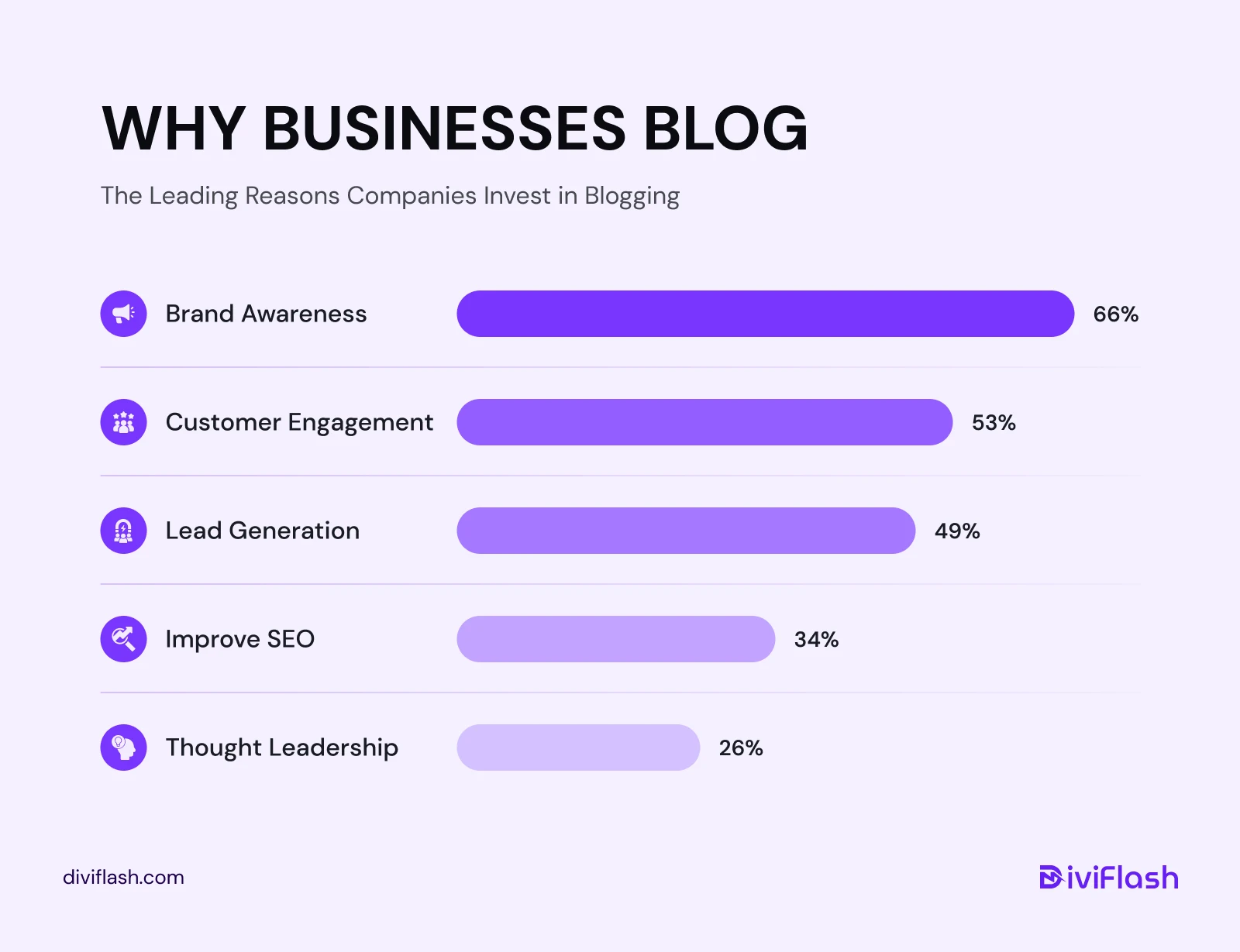
10. Around 66% of businesses blog to build brand awareness
Around 66% of businesses publish blog posts to help more people recognize their brand. (HubSpot)
11. Around 53% use blogs to engage customers
Around 53% of businesses use blog posts to connect with current and potential customers. (HubSpot)
12. Around 49% use blogging to generate leads
Nearly half of businesses publish blog posts to attract potential customers and generate leads. (HubSpot)
13. Publishing more posts may increase blog traffic
One study found that websites could get up to 30% more traffic after publishing between 21 and 54 blog posts. (IMPACT)
14. Around 34% blog to improve SEO
Around 34% of businesses publish blog posts to improve their search rankings and get more organic traffic. (HubSpot)
15. Around 68% of consumers read content from brands they like
Around 68% of consumers read blogs and other content from brands they are interested in. (FNBO)
16. Around 26% use blogs to build thought leadership
Around 26% of businesses publish blog posts to share their expertise and build trust in their industry. (HubSpot)
Blogging Performance Statistics
17. Around 54% track pageviews
Around 54% of businesses use pageviews to measure how well their blog is performing. (HubSpot)
18. Around 61% of consumers have purchased after reading a blog recommendation
More than six in ten U.S. consumers say a blog recommendation has influenced them to make a purchase. (99firms)
19. Around 53% track social shares
Around 53% of businesses measure social shares to see how their blog content performs. (HubSpot)
20. Traffic and visibility are the leading definitions of blogging success
Most bloggers measure success by traffic and visibility (77%), followed by leads and brand growth (69%). (Orbit Media)
21. Around 46% measure conversions
Around 46% of businesses measure whether blog visitors sign up, become leads, or make a purchase. (HubSpot)
22. Updating underperforming content increased traffic by approximately 72%
Refreshing outdated content can increase traffic by an average of 72%. (Ahrefs)
23. Around 60% of B2B buyers prefer short-form content
Around 60% of B2B buyers prefer short and easy-to-read content when researching products or services. (Column Content)
24. Around 45% track time on page
Around 45% of businesses use time on page to measure how long readers stay on their blog. (HubSpot)
25. Around 83% of B2C marketers use blog posts or short articles
Around 83% of B2C marketers use blog posts or short articles as part of their content strategy. (99firms)
26. Only 22% measure backlinks
Just 22% of businesses measure backlinks to evaluate their blog's performance. (HubSpot)
Blog Publishing Frequency Statistics
27. Around 22% of blogging businesses publish daily
Around 22% of businesses with blogs publish new content daily. (HubSpot)
28. Around 37% publish two or three times a week
Around 37% of businesses publish two or three blog posts each week. (HubSpot)
29. Publishing frequency has declined over time
Orbit Media found that bloggers publish less frequently today, while posting several times a month has become more common. (Orbit Media)
30. Around 30% publish once a week
Around 30% of businesses follow a weekly blog publishing schedule. (HubSpot’)
31. Around 7% publish every two weeks
Around 7% of businesses publish one new blog post every two weeks. (HubSpot)
32. Only 5% publish once a month
Just 5% of businesses publish about one new blog post each month. (HubSpot)
33. Around half publish two to four posts a month
Around half of content marketers publish between two and four blog posts each month. (Orbit Media)
34. Frequent publishers report better results more often
Around 37% of businesses that publish several times a week report strong results, compared to 21% overall. (Orbit Media)
Blog Content Statistics
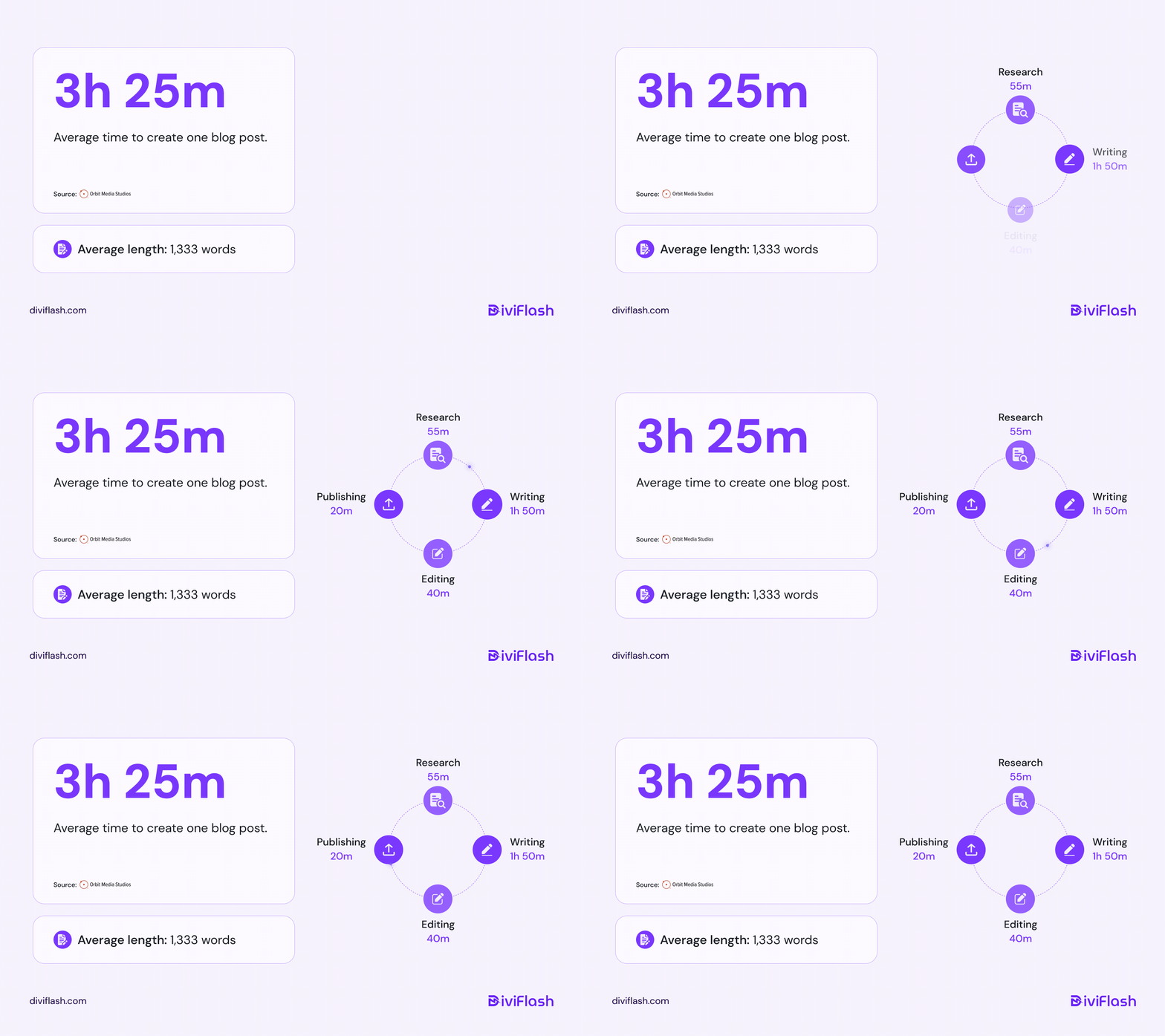
35. The average blog post length is about 1,333 words
The average blog post contains around 1,333 words, according to Orbit Media’s survey. (Orbit Media)
36. Long-form content often delivers stronger results
Around 39% of bloggers who publish posts longer than 2,000 words report strong results, compared with 21% overall. (Orbit Media)
37. Around 75% of B2B marketers publish case studies or customer stories
Around 75% of B2B marketers use case studies and customer success stories in their content strategy. (Content Marketing Institute)
38. A blog post takes about 3 hours and 25 minutes to create
The average time to write a blog post dropped from 4 hours and 10 minutes in 2022 to 3 hours and 25 minutes in 2026. (Orbit Media)
39. Around 76% publish how-to articles
Around 76% of marketers create how-to articles, making them the most popular type of blog content. (Orbit Media)
40. Around 54% publish list articles
More than half of marketers regularly publish list-style blog posts. (Orbit Media)
41. Around 53% publish guides or ebooks
Around 53% of marketers create detailed guides or ebooks as part of their content strategy. (Orbit Media)
42. How-to guides perform well for 51% of businesses
Around 51% of businesses say how-to guides are one of their best-performing blog formats. (HubSpot)
43. Industry news performs well for 45%
Around 45% of businesses report good results from publishing industry news articles. (HubSpot)
44. Around 60% include statistics
Around 60% of marketers use statistics or research data to make their blog posts more credible. (Orbit Media)
45. Case studies perform well for 42%
Around 42% of businesses say case studies are one of their best-performing content formats. (HubSpot)
46. Explainer articles perform well for 34%
Around 34% of businesses get strong results from blog posts that explain topics in simple terms. (HubSpot)
47. Product listicles perform well for 23%
Around 23% of businesses say product list articles are among their best-performing blog formats. (HubSpot)
Evergreen and Timely Content Statistics
48. Around 40% publish an equal mix of evergreen and timely content
Around 40% of businesses publish an equal mix of evergreen content and timely blog posts. (HubSpot)
49. News articles generate most of their value quickly
News articles can receive around 80% of their total lifetime value within the first week after publication. (Content Marketing Institute)
50. Around 24% focus mainly on evergreen content
Around 24% of businesses publish mostly evergreen content, with a smaller share of timely posts. (HubSpot)
51. Around 18% focus mainly on timely content
Around 18% of businesses focus mainly on timely content, with fewer evergreen blog posts. (HubSpot)
52. Only 7% publish evergreen content exclusively
Just 7% of businesses publish blog posts that are entirely evergreen. (HubSpot)
53. Only 2% publish timely content exclusively
Just 2% of businesses rely only on news, trends, and other timely blog posts. (HubSpot)
Original Research and Expert Content Statistics
54. Around 49% publish original research
Around 49% of marketers publish original research in their blog content. (Orbit Media)
55. Original research often delivers stronger results
Around 25% of marketers who publish original research report strong results, compared to 21% overall. (Orbit Media)
56. Data-backed posts perform slightly better
Around 24% of bloggers who include statistics in their posts report strong results, compared to 21% overall. (Orbit Media)
57. Around 45% include contributor quotes
Around 45% of marketers add quotes from experts, contributors, or influencers to their blog posts. (Orbit Media)
Blogging Visual and Video Statistics
58. Around 88% include images in their articles
Around 88% of marketers use images, making them the most popular visual element in blog content. (Orbit Media)
59. Around 26% add videos to their articles
Around 26% of marketers include videos in their blog content. (Orbit Media)
60. Only 7% include audio content
Audio iJust 7% of marketers use audio content in their blog posts. (Orbit Media)
61. Around 76% of B2B marketers use video content
Around 76% of B2B marketers created or used video content during the past 12 months. (Content Marketing Institute)
62. Most bloggers use two or three visuals per article
Around 51% of bloggers include two or three visuals in each blog post, making it the most common approach. (Orbit Media)
63. Around 82% say video increased website traffic
Around 82% of marketers say video helps increase website traffic. The same percentage also says video keeps visitors on their websites longer. (Wyzowl)
Blogging and AI Statistics
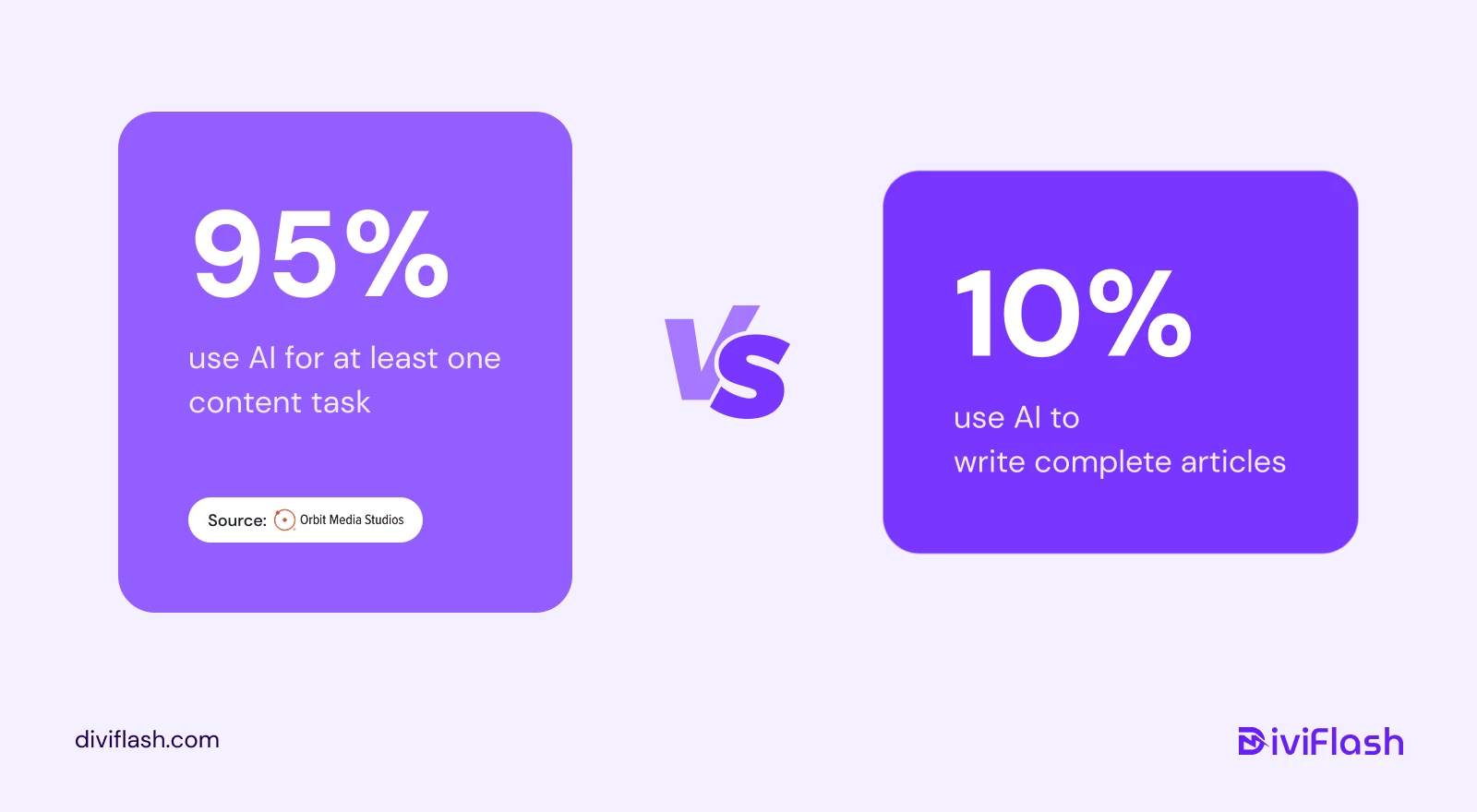
64. Around 95% use AI for at least one content task
Around 95% of marketers use AI for at least one content creation task. Only 5% say they do not use AI in their content workflow. (Orbit Media)
65. Only 4% never use AI for blogging
Just 4% of marketers say they never use AI for blogging. Most use it for at least part of their content creation process. (HubSpot)
66. Around 43% use AI for editing and proofreading
Around 43% of marketers use AI to edit and proofread their blog posts. (HubSpot)
67. Around 38% use AI to create outlines
Around 38% of marketers use AI to create blog outlines and organize their content. (HubSpot)
68. Around 58% use AI to write headlines
Around 58% of marketers use AI to create, improve, or brainstorm blog post headlines. (HubSpot)
69. Around 37% use AI for first drafts
More than one-third of HubSpot respondents use AI Around 37% of marketers use AI to create the first draft of their blog posts. (HubSpot)
70. Around 31% use AI to create images
Around 31% of marketers use AI-generated images in their blogging workflow. (HubSpot)
71. Around 30% use AI for topic research
Around 30% of marketers use AI to research topics and generate content ideas. (HubSpot)
72. Around 26% use AI for meta descriptions
Around 26% of marketers use AI to create or improve meta descriptions for SEO. (HubSpot)
73. ChatGPT is the most-used AI tool for blogging
ChatGPT is the most-used AI tool for blogging, followed by Google Gemini, Copy.ai, Claude, Jasper, and HubGPT. (HubSpot)
74. Around 94% plan to use AI for content creation
Around 94% of marketers planned to use AI for content creation, including blog writing, in 2026. (HubSpot)
75. Around 67% produce more content after adopting AI
Around 67% of marketers say they produce more content after adopting AI tools. (HubSpot)
76. Only 17% rate AI-generated content highly
Just 17% of B2B marketers rate AI-generated content as excellent or very good. (Content Marketing Institute)
77. Only around one in ten use AI to write complete articles
Only around 10% of marketers use AI to create complete blog articles from start to finish. (Orbit Media)
78. Fully AI-written articles are linked to weaker results
Orbit Media found that fully AI-written blog posts were the least likely to produce strong results. (Orbit Media)
Blogging SEO Statistics
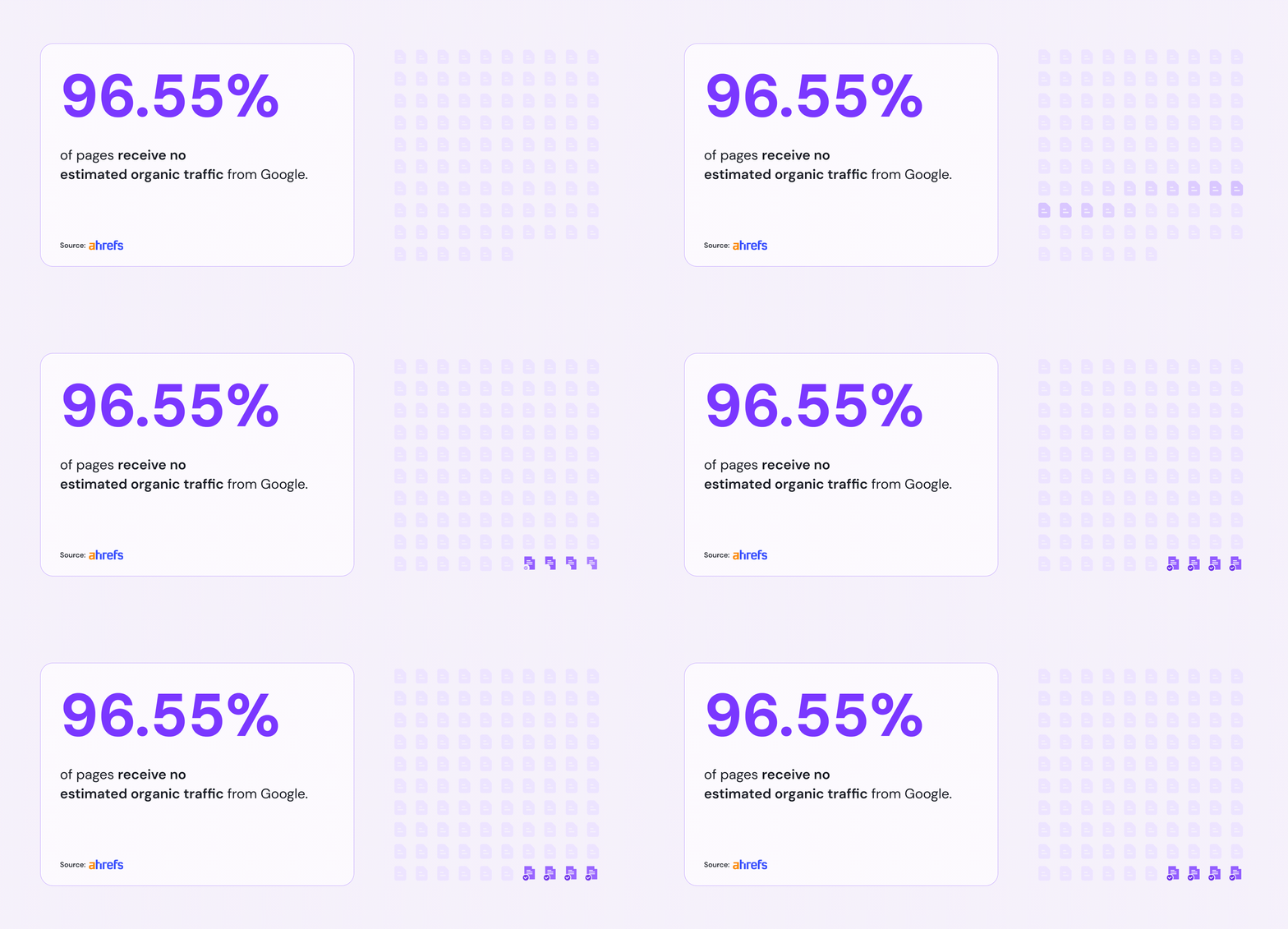
79. Around 96.55% of pages receive no Google traffic
Ahrefs found that around 96.55% of web pages receive no estimated organic traffic from Google. (Ahrefs)
80. Only 1.94% receive one to ten monthly visits
Just 1.94% of web pages receive between one and ten estimated Google visits each month. (Ahrefs)
81. Only 1.74% of new pages reached Google’s top 10
Just 1.74% of new web pages rank in Google's top 10 search results within one year. (Ahrefs)
82. Around 6.11% of selected English pages reached the top 10
Around 6.11% of English-language web pages rank in Google's top 10 search results within one year. (Ahrefs)
83. Around 72.9% of top-ranking pages are over three years old
Around 72.9% of pages in Google's top 10 search results are more than three years old. (Ahrefs)
84. The first Google result gets an average CTR of 27.6%
The top organic result on Google receives an average click-through rate (CTR) of 27.6%. (Backlinko)
85. Longer articles receive around 77.2% more backlinks
Long-form articles receive around 77.2% more backlinks than shorter blog posts. (Backlinko)
86. Around 94% of published content receives no backlinks
Around 94% of published content never earns a single external backlink. (Backlinko)
87. The average number-one Google result is five years old
Pages ranking in the #1 position on Google are about five years old on average. (Ahrefs)
88. Around 63% struggle to attract search traffic
Around 63% of content marketers say attracting traffic from search engines is one of their biggest challenges. (Orbit Media)
89. Around 56% struggle to keep readers engaged
Around 56% of content marketers say keeping internet users engaged is a major challenge. (Orbit Media)
90. Around 40.82% of successful new pages ranked within one month
Among new pages that reached Google's top 10 within a year, around 40.82% ranked within their first month. (Ahrefs)
Blog Promotion Statistics
91. Around 83% promote blog content on social media
Around 83% of businesses use social media to share and promote their blog posts. (HubSpot)
92. Around 47% use email marketing
Around 47% of businesses share new blog posts with their email subscribers. (HubSpot)
93. Around 47% use paid advertising
Around 47% of businesses use paid advertising to increase the reach of their blog content. (HubSpot)
94. Around 36% rely on organic search
Around 36% of businesses use organic search to help readers find their blog posts. (HubSpot)
95. Around 33% promote content through influencers
Around 33% of businesses work with influencers or guest contributors to promote their blog content. (HubSpot)
96. Around 23% use paid search
Around 23% of businesses use paid search advertising to drive traffic to their blogs. (HubSpot)
97. Around 93% of content marketers use social media for promotion
Around 93% of content marketers use social media to promote their blog posts and other content. (Orbit Media)
Guest Blogging Statistics
98. Only around 37% write for other websites
Around 37% of content marketers publish guest posts on other websites. (Orbit Media)
99. Guest contributors report stronger results
Around 30% of marketers who write guest posts report strong results, compared to 15% of those who do not. (Orbit Media)
Blog Analytics Statistics
100. Only around one-third review every article’s performance
Only around one-third of marketers check the performance of every blog post after publishing it. (Orbit Media)
101. Regular analytics users report stronger results
Marketers who regularly review blog analytics are more likely to report strong results than those who rarely use analytics. (Orbit Media)
Blog Credibility and E-E-A-T Statistics
102. Around 43% show expertise through citations
Around 43% of businesses support their blog posts with trusted sources and citations to build credibility. (HubSpo)
103. Around 42% use author bios with credentials
Around 42% of businesses add author bios to highlight the writer's experience and qualifications. (HubSpot)
104. Around 40% link to professional profiles
Around 40% of businesses link to professional profiles so readers can learn more about the author. (HubSpot)
105. Around 27% mention industry certifications
Around 27% of businesses mention industry certifications to strengthen their authors' credibility. (HubSpot)
106. Around 45% share team members’ experiences
Around 45% of businesses use stories and insights from team members to show firsthand experience. (HubSpot)
107. Around 36% include original expert quotes
Around 36% of businesses add original quotes from industry experts to their blog posts. (HubSpot)
108. Around 35% use real client case studies
Around 35% of businesses share real client case studies to demonstrate practical experience and results. (HubSpot)
109. Around 31% improved their fact-checking process
Around 31% of businesses strengthened their fact-checking process to improve content accuracy. (HubSpot)
Future of Blogging Statistics
110. Around 56% expect blogging to become more important
Around 56% of businesses believe blogging will play a bigger role in their future content strategy. (HubSpot)
111. Around 32% expect blogging to remain stable
Around 32% of businesses expect their blogging efforts to remain at the current level. (HubSpot)
112. Only 7% expect to reduce their blogging efforts
Just 7% of businesses expect to reduce their investment in blogging. (HubSpot)
113. Around 81% are also investing in video
Around 81% of businesses that blog are also investing in video content. (HubSpot)
114. Around 53% are investing in podcasts
Around 53% of businesses use podcasts to support their blogging and content marketing efforts. (HubSpot)
115. Around 46% are investing in newsletters
Around 46% of businesses use email newsletters to share blog content and engage their audience. (HubSpot)
116. Around 39% are investing in webinars
Around 39% of businesses use webinars to educate their audience and support their content strategy. (HubSpot)
117. Around 20% are investing in ebooks
Around 20% of businesses create ebooks alongside their regular blog content. (HubSpot)
Blog Traffic and Readership Statistics
118. 100–299 Posts Average 37,370 Monthly Pageviews
Blogs with 100 to 299 published posts receive an average of 37,370 monthly pageviews. (Productive Blogging)
119. 300–499 Posts Average 85,822 Monthly Pageviews
Blogs with 300 to 499 published posts average 85,822 monthly pageviews, more than doubling the traffic of blogs with 100–299 posts. (Productive Blogging)
120. 500–999 Posts Average 166,853 Monthly Pageviews
Blogs with 500 to 999 published posts average 166,853 monthly pageviews, the highest traffic among the blog size groups in the survey. (Productive Blogging)
121. Blogs Aged 5–10 Years Average 55,287 Monthly Pageviews
Blogs that have been active for 5 to 10 years receive an average of 55,287 monthly pageviews. (Productive Blogging)
122. Blogs Over 10 Years Old Average 132,348 Monthly Pageviews
Blogs that are more than 10 years old receive an average of 132,348 monthly pageviews,. (Productive Blogging)
Blogging Income and Monetization Statistics
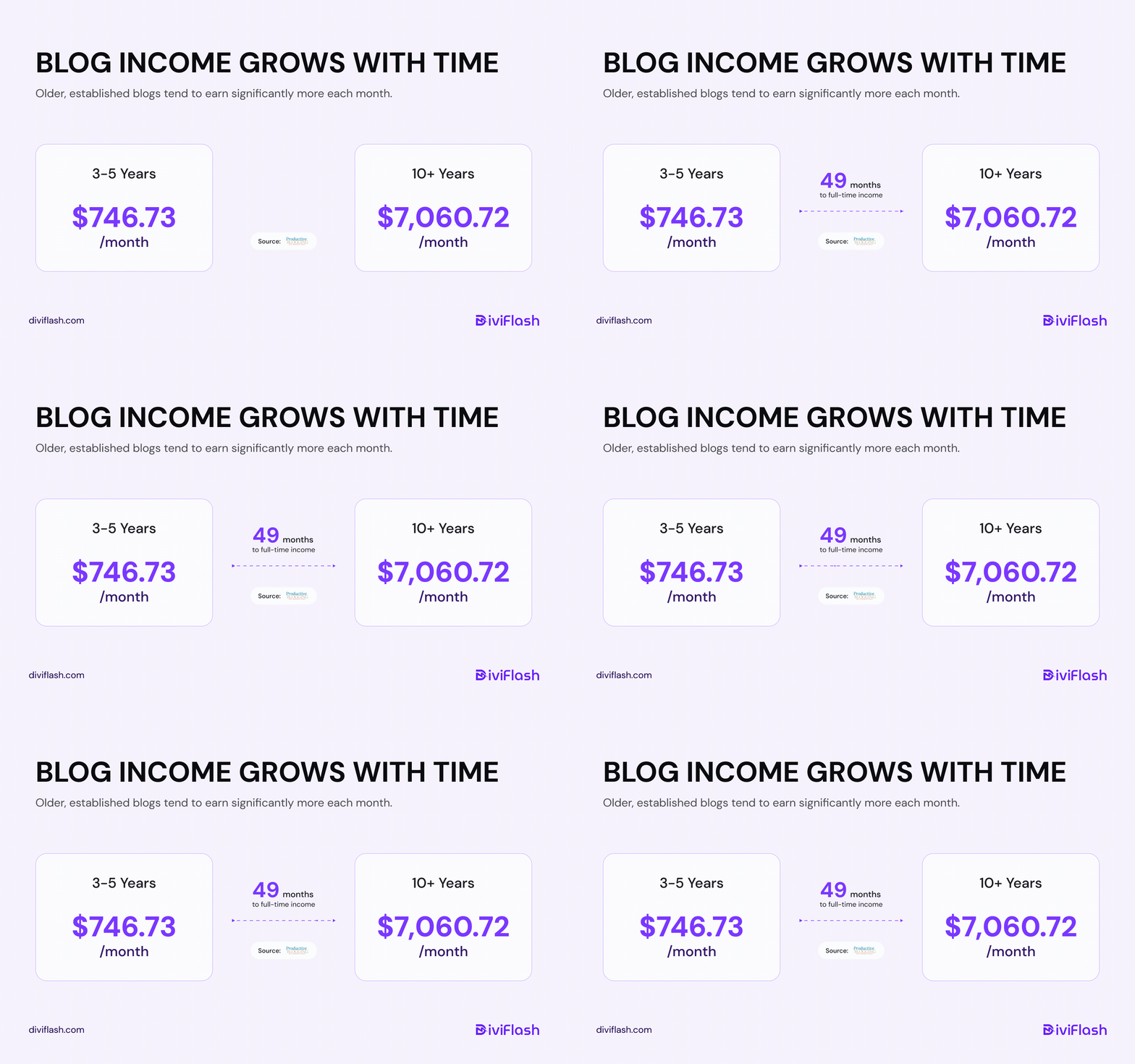
123. Blogs aged 3–5 years earn about $746.73 per month
Blogs that are 3 to 5 years old earn an average blogging income of $746.73 per month. (Productive Blogging)
124. Blogs older than 10 years earn about $7,060.72 per month
Blogs that are more than 10 years old earn an average blogging income of $7,060.72 per month. (Productive Blogging)
125. It takes about four years to earn a full-time blogging income
On average, it takes 4 years and 1 month (49 months) to earn a full-time blogging income. (Productive Blogging)
126. Blogs with four or more income streams earn about $129.92 RPM
Blogs with four or more monetization methods earn an average RPM (revenue per 1,000 pageviews) of $129.92. (Productive Blogging)
127. Digital products generate the highest blog RPM
Digital products generate the highest blog RPM, with an average of $535.90 per 1,000 pageviews. (Productive Blogging)
128. Affiliate marketing generates about $34.66 RPM
Affiliate marketing generates an average blog RPM of $34.66 per 1,000 pageviews. (Productive Blogging)
129. Sponsored posts generate about $100 RPM
Sponsored blog posts generate an average RPM of $100 per 1,000 pageviews. (Productive Blogging)
Frequently Asked Questions on Blogging Stats
Is blogging still popular in 2026?
Yes. Around 65% of marketers work for companies that regularly publish blogs. Among those companies, 93% say blogging is important or very important to their marketing strategy.
How long does it take to write a blog post?
On average, it takes 3 hours and 25 minutes to write a blog post.
How often should a business publish blog posts?
There is no perfect schedule. HubSpot found that 37% of businesses publish two or three posts per week, while Orbit Media found that about half publish two to four posts per month.
Does blogging help with SEO?
Yes. Blogging helps websites target more keywords, build topical authority, and attract backlinks. However, results take time. Ahrefs found that 96.55% of web pages receive no estimated Google traffic, showing that quality and consistency matter.
How many bloggers use AI?
Around 95% of marketers use AI for at least one content task, while only 4% never use AI during the blogging process.
Can bloggers still make money?
Yes. Productive Blogging found that blogs aged five to ten years earn an average of $2,325.62 per month, while blogs older than ten years average $7,060.72 per month.
Which blogging monetization method earns the most?
According to Productive Blogging's survey, digital products generate the highest average RPM at $535.90 per 1,000 pageviews. However, earnings vary greatly depending on your niche, audience, and business model.
Final Thoughts: What These Statistics Mean
The latest blogging statistics show one clear thing: blogging still matters in 2026. But publishing more posts is not enough.
Strong blogs focus on useful ideas, trusted sources, original research, and real experience. They also update old content, promote each post, and track what works.
AI can make research, outlining, editing, and repurposing faster. Still, human judgment is what builds trust. Readers want clear answers, honest insights, and content that feels helpful.
Competition is also growing. Most pages get little or no search traffic. So every post needs a clear purpose and something unique.
Treat blogging as a long-term strategy. Publish with care, measure the results, improve your best posts, and keep adapting as your audience and search trends change.
If you want to see more statistics about blogs, bookmark this page. We will keep it updated with the latest data and trends.
FURTHER READING:


0 Comments